


.png)
In today's world, corporate training is no longer limited to traditional classrooms or monotonous online courses. Forward-thinking organizations are seeking solutions that make learning a natural and enjoyable part of work culture. A Learning Experience Platform (LXP) pursues exactly this goal. In this comprehensive guide, we cover everything about LXP, its differences from LMS, benefits, features, and how to implement it in your organization.
What is an LXP?
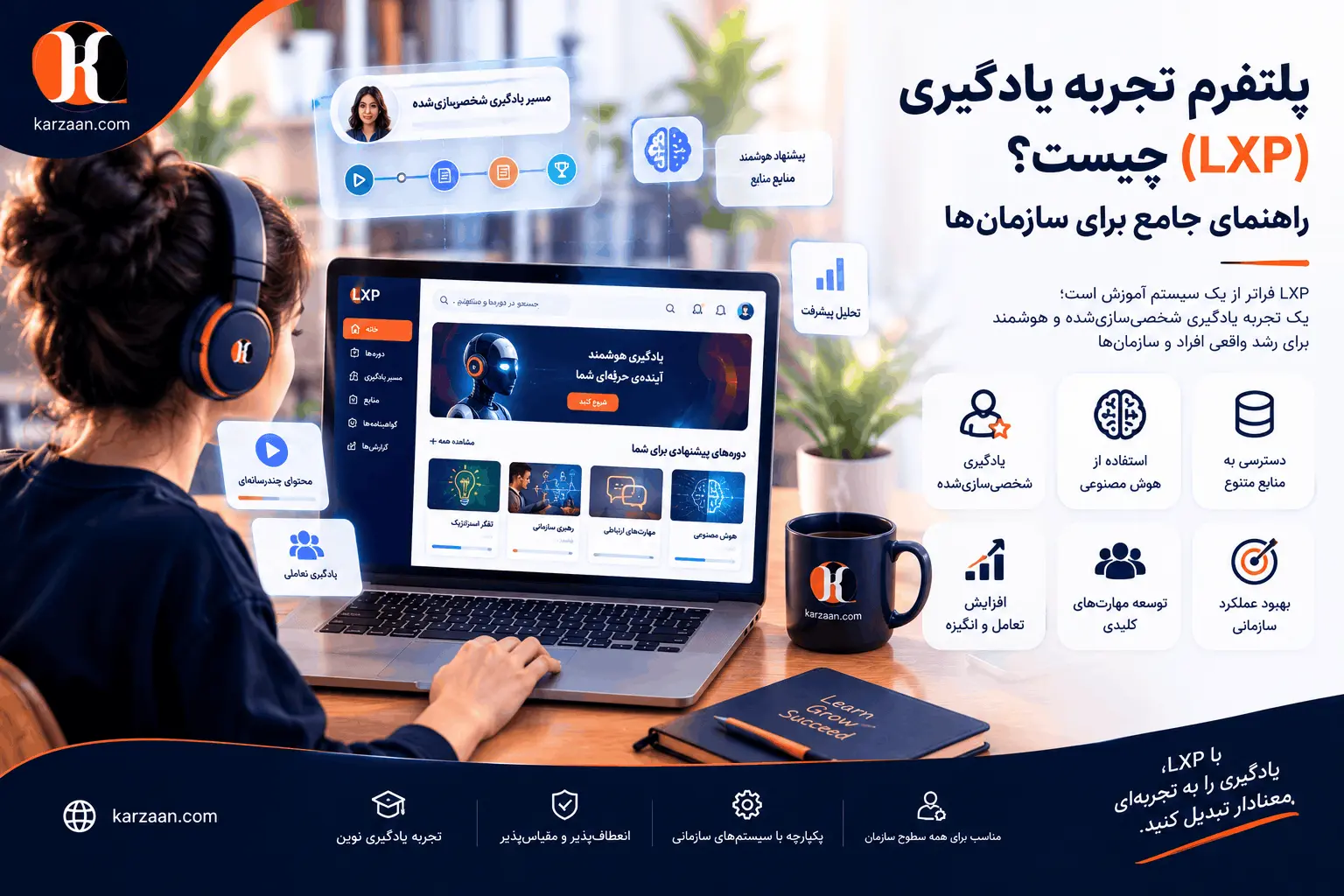
An LXP or Learning Experience Platform is an advanced software system that delivers a personalized, engaging, and effective learning experience for employees. Unlike traditional training systems, LXP uses artificial intelligence and user behavioral data to serve content tailored to each person's needs, interests, and knowledge level.
The term LXP was first coined by Josh Bersin, a leading HR industry analyst, in 2017. Since then, it has become one of the most important human resource development tools in large organizations worldwide.
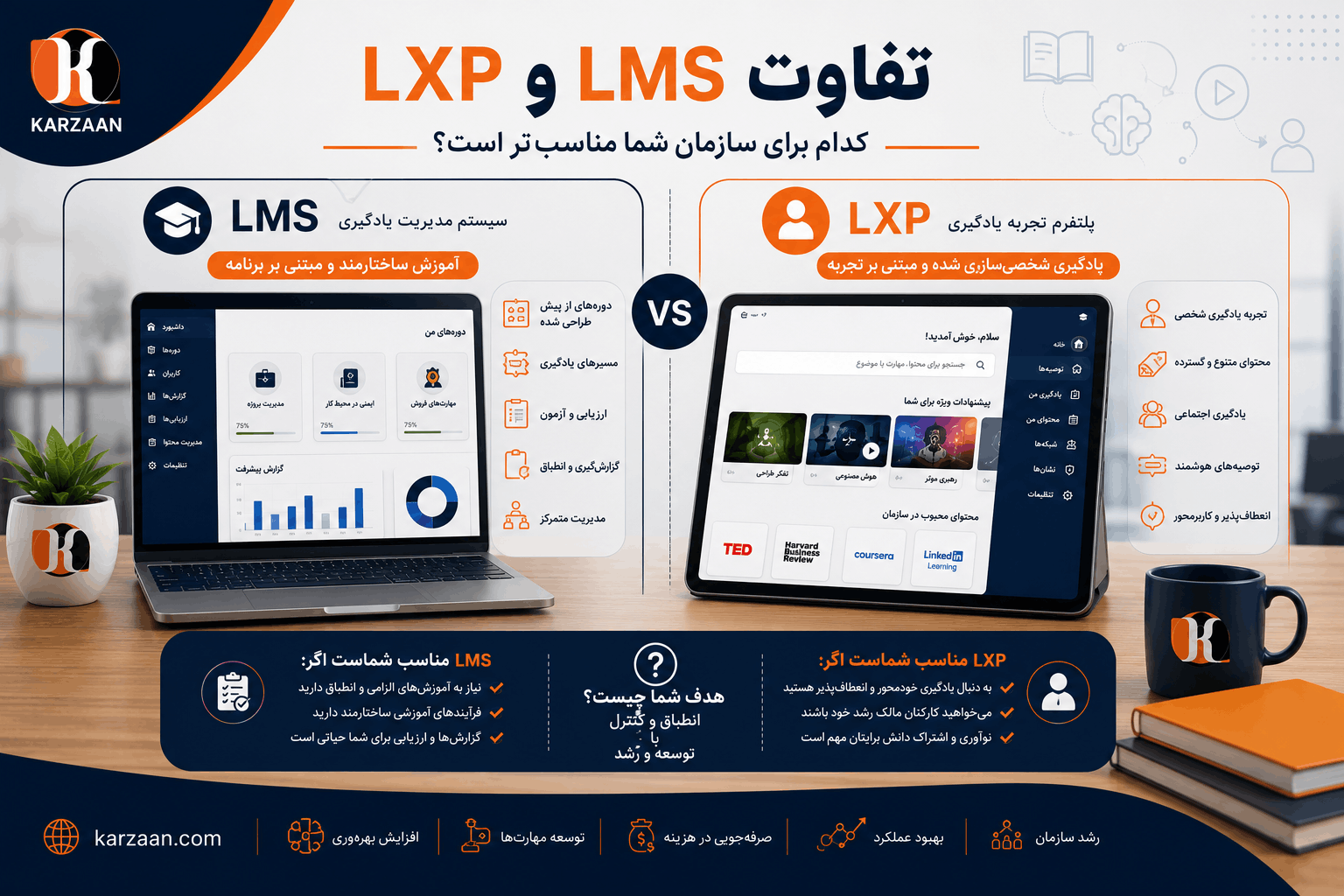
What Is the Difference Between LXP and LMS?
One of the most common questions in corporate training is the difference between LXP and LMS. Both tools are used to manage and deliver training, but their approaches and capabilities differ significantly.
LMS: The Traditional Learning Management System
An LMS or Learning Management System is a platform designed primarily for training administrators. These systems offer powerful tools for creating, organizing, distributing, and assessing training courses. Key features of an LMS include:
- Centralized course management
- Learner progress tracking
- Quizzes and assessments
- Certificate issuance
- Reporting to managers
However, LMS has one critical weakness: user experience. Employees often find LMS dry, unappealing, and impersonal. LMS learning is typically top-down: the manager decides what content must be taught and the employee is required to complete it.
To learn more about LMS, visit the Karzaan LMS page.
LXP: The Next-Generation Learning Experience Platform
By contrast, an LXP is designed with a completely different approach. The main focus of an LXP is the learner, not the manager. LXP creates an experience similar to social media and streaming platforms (like Netflix or YouTube), where content is recommended based on the user's interests and behavior.
| Feature | LMS | LXP |
|---|---|---|
| Primary focus | Training administrator | Learner |
| Content | Internal production | Multi-source (internal + external) |
| Learning path | Pre-defined | AI-personalized |
| User experience | Formal and structured | Engaging and social |
| Social learning | Limited | Advanced |
| Flexibility | Low | High |
Many organizations use both systems as complements: LMS for mandatory and compliance training (e.g., HSE training), and LXP for voluntary skill development and professional growth.
Key Features of a Professional LXP
Not every platform claiming to be an LXP truly delivers these capabilities. A genuine, professional LXP must have the following features:
AI-Powered Personalized Learning
The beating heart of any LXP is the AI-driven content recommendation engine. This system analyzes user behavioral data — such as content viewed, time spent, ratings given, and skills listed in the profile — and recommends matching content.
This personalization goes beyond simple filtering. Karzaan's artificial intelligence uses advanced algorithms that can:
- Identify each employee's skill gaps
- Suggest optimal learning paths
- Determine the right time to learn each concept
- Deliver content based on individual learning styles
Multi-Source, Integrated Content
One of LXP's major advantages over LMS is the ability to integrate content from diverse sources. A good LXP can consolidate content from:
- Internal organizational courses
- External training platforms (Coursera, LinkedIn Learning, Udemy)
- Articles, videos, and podcasts
- E-books and specialist publications
- Employee-generated content (User-Generated Content)
This integration allows employees to access all their learning resources without leaving the platform.
Gamification and Engaging User Experience
Gamification is one of the most effective tools for boosting learning motivation. A professional LXP uses game elements to create healthy competition and incentive:
- Points and badges: Employees earn points for completing courses and sharing knowledge
- Leaderboards: Friendly competition among colleagues
- Digital badges and certificates: Proof of acquired skills
- Learning challenges: Team competitions for learning
- Progress bars: Visual display of the learning journey
Social Learning and Peer-to-Peer
Humans naturally learn from each other. LXP supports this social nature of learning with tools like:
- Discussion forums
- Content sharing between colleagues
- Mentoring programs
- Interest-based learning communities
- Content ratings and reviews
Research shows that 70 percent of real workplace learning happens through practical experience and peer interactions, not formal courses. LXP takes this reality into account.
Benefits of LXP for Organizations
Investing in LXP delivers significant returns. Let's examine the specific, measurable benefits of this investment:
Increased Employee Engagement
One of the biggest challenges in corporate training is low course completion rates. In many organizations, more than 80 percent of employees who register for LMS courses drop out before finishing.
LXP solves this problem through personalization and gamification. Industry reports show that:
- Course completion rates on LXP are up to 50 percent higher than LMS
- Time spent on voluntary learning increases by up to 40 percent
- Employee satisfaction with training programs improves significantly
Continuous and Faster Skill Development
In today's knowledge economy, the speed of developing new skills is a competitive advantage. LXP accelerates skill development by delivering current, relevant content.
Additionally, LXP features automatic skill gap identification. This means the system can detect what skills an employee newly placed in a role needs and suggest an appropriate learning path.
Visit the Karzaan LXP page to learn about our skill development solutions.
Advanced Analytics and Smart Reporting
LXP is not just a learning tool — it's also an intelligent data analytics system. Organizational managers can use LXP's comprehensive dashboards to:
- Monitor learning progress at individual, team, and organizational levels
- Identify the most popular and effective content
- Analyze skill gaps across the organization
- Predict future training needs
- Measure ROI of training programs
These analytics help HR managers make better strategic decisions about training investments.
LXP in the Market: Status and Opportunities
The global LXP market is at a critical juncture. On one hand, the demand for digital skill development in the workforce has never been higher. On the other hand, most organizations still rely on traditional training methods.
Key challenges in corporate training today include:
- Reliance on high-cost in-person training
- Lack of integrated organizational knowledge management systems
- Insufficient access to quality training content
- Poor user experience in legacy LMS platforms
- Difficulty measuring true learning impact
These challenges simultaneously represent a significant opportunity for organizations that adopt LXP early and build a genuine learning culture.
Karzaan LXP: A Complete Learning Experience Platform
Karzaan LXP is a comprehensive learning experience platform designed with the specific needs of modern organizations in mind. Karzaan combines the best features of global LXPs with full localization and multi-language support.
Core Features of Karzaan LXP
Karzaan LXP delivers a complete set of learning capabilities in one integrated platform:
- Multilingual content library: Thousands of courses in Persian, English, Arabic, and Kurdish
- Smart recommendation engine: Content suggested based on job role, skills, and learning history
- Adaptive learning paths: Training programs that adjust as the learner progresses
- Organizational system integration: Connection to ERP, HRMS, and other business software
- Advanced reporting: Comprehensive dashboards for managers and HR
- All-device support: Access from computer, tablet, and mobile
Artificial Intelligence Integration
Karzaan leverages advanced artificial intelligence capabilities to take the learning experience to a new level. Karzaan's AI system can:
- Create fully personalized learning paths for each employee
- Automatically identify skill gaps in teams
- Select appropriate training content from thousands of options
- Generate advanced analytical reports for management decision-making
- Integrate with AI agents (in Persian) to automate training processes
Which Organizations Need an LXP?
LXP isn't right for every organization. But if yours faces any of the following challenges, it may be time to consider an LXP:
Indicators That You Need an LXP
- Low participation in training: If employees aren't engaging with existing training, the learning experience needs to change
- Rapid organizational growth: Fast-growing organizations can't scale traditional training
- Geographically distributed teams: If employees work in different locations, LXP is the ideal solution
- Digital transformation: Organizations digitizing their processes need continuous training
- Talent war: To attract and retain Gen Z and millennial talent, you must offer a modern learning experience
- Need for digital skill development: If your teams need to continuously learn new skills
Organizations with 100 or more employees typically get the best ROI from LXP, though modern cloud LXPs are also cost-effective for smaller businesses.
Steps to Implement LXP in Your Organization
Successful LXP implementation requires careful planning. Here is Karzaan's step-by-step approach to LXP implementation:
Step One: Assess Needs and Organizational Culture
Before taking any action, you need a clear understanding of your organization's current training situation. This assessment covers:
- Review of existing training programs and their completion rates
- Identification of key skill gaps in the organization
- Assessment of cultural readiness to adopt digital learning
- Analysis of existing technology infrastructure
- Definition of target training KPIs
Step Two: Choose the Right Platform
Based on the assessment results, select the right LXP. Key criteria include:
- Customization capability: Can you adapt the platform to your brand and organizational needs?
- Integration with existing systems: Does the LXP work with your HRMS, ERP, and other software?
- Language support: Multi-language support is essential for global teams
- Scalability: Can the platform grow with your organization?
- Technical support: What level of support does the vendor provide?
For free consultation on choosing the right LXP for your organization, reach out through the contact page.
Step Three: Launch and Train the Team
LXP rollout is a phased process typically taking 4 to 8 weeks. Key stages include:
- Initial configuration: Setting up organizational structure, roles, and permissions
- Content migration: Moving existing courses and connecting to external sources
- Training content admins: HR team must learn content creation and management tools
- Pilot with small group: Test with one department before full rollout
- Full launch: With an internal communication campaign to inform employees
LXP Costs and Return on Investment (ROI)
One of the main questions managers have about LXP is cost. LXP pricing is typically subscription-based, monthly or annually, per user.
Globally, LXP costs typically range from $5 to $30 per user per month. But to calculate the true ROI, consider these factors:
- Eliminated costs: Reduction in in-person training, travel, and accommodation expenses
- Productivity gains: Employees with better skills perform more efficiently
- Reduced turnover: Better training = more satisfied employees = lower recruitment costs
- Quality improvement: More up-to-date skills lead to better output quality
Studies show that organizations that have implemented LXP typically achieve an ROI of 200 to 400 percent over the first three years.
Contact us for pricing information on Karzaan LXP.
Future Trends in LXP
LXP technology is rapidly evolving. Here's a look at the most important future trends in this space:
Generative AI and Adaptive Learning
Generative AI is revolutionizing LXPs. Capabilities we'll see soon include:
- Automatic content creation: AI can generate personalized training courses
- Smart learning assistant: Chatbots that answer learner questions
- Adaptive assessment: Tests that adjust their difficulty to the learner's ability
- Auto-translation and localization: Content automatically translated into the required language
Karzaan is developing these capabilities using its native AI engine.
Microlearning and Learning in the Flow of Work
Microlearning — short-form learning — is one of the most important educational trends. Research shows the human brain performs best in short 5 to 15-minute intervals.
Future LXPs will use microlearning in these ways:
- Short 5-minute videos on specific concepts
- Digital flashcards for quick review
- Learning in the Flow of Work
- Smart notifications for reminders and review
Conclusion
A Learning Experience Platform (LXP) is no longer an educational luxury — it has become a strategic necessity for organizations that want to remain competitive in today's rapidly changing world. LXP creates a fundamentally different learning experience for employees by combining intelligent personalization, rich multi-source content, gamification, and social learning.
Karzaan LXP offers all these capabilities with a deep understanding of the needs and challenges of modern organizations. If you want to place your organization on the digital learning path, contact our team today.