



.png)
AI Agents in the Steel and Mining Industries: From Ore Grade to Delivering the Product to the Customer
The steel and mining industries have a long and costly value chain: from exploring and extracting ore at the mine to processing and concentration, melting in the furnace, rolling and finally delivering the product to the customer. Every link in this chain generates a large amount of data, runs heavy and expensive equipment, consumes a lot of energy and puts people to work in hazardous environments. The smallest improvement in any link can have a big financial impact, and the smallest mistake can stop production. An AI agent is a tool that can support engineers, operators and managers across all of these links.

This article is the third part of our "agents in industry" series. In What is an AI agent (in Persian) we explained the general concept, and we have looked at its use in banking and fintech (in Persian) and in oil, gas and petrochemicals (in Persian). In this part we turn to steel and mining and review how agents are used in mine planning, fleet management, mineral processing, steelmaking, energy management, safety, and the supply chain and sales. Finally, we explain the data prerequisites, the implementation roadmap and the common mistakes in these projects.
Why Do the Steel and Mining Industries Need AI Agents?
Large steel and mining companies have invested in industrial automation, control systems and enterprise software for years. But most of these systems work as islands: mine data in one system, plant data in another, maintenance data in the maintenance system and sales data in the ERP. Important decisions usually depend on manually pulling information together from several sources and on the experience of key people. An AI agent can bring this data together, answer questions in natural language and raise an alert before a problem grows. For a general look at where AI fits in organizations, see our article Where should we use AI? (in Persian)
The difference between an agent and the usual dashboards and management reports is that an agent doesn't wait for someone to open a report. It can monitor data continuously, detect anomalies, look into the likely cause and message the person responsible. And any employee, from a mine shift supervisor to the sales manager, can ask their question in plain language without any reporting skills and get a documented answer.
A Long Chain from the Mine to the Final Product
In a mining and steel complex, decisions at each stage affect the stages that follow. The grade of the ore mined affects recovery at the concentrator, the quality of concentrate and pellets affects furnace performance and energy use, and the plant's production plan must match customer orders and transport capacity. The problem is that each unit usually sees only its own data. An agent can act as a "chain analyst" that puts different units' data side by side and shows how one unit's decisions affect the others.
The Heavy Cost of Energy, Raw Materials and Downtime
Steel is one of the most energy-intensive industries, and a large part of its cost is energy, raw materials and equipment maintenance. At the mine, fuel, tires and parts for the heavy fleet are the main costs. In such an industry, even a few percent improvement in energy use or a few hours less unplanned downtime creates significant financial value. Through continuous monitoring and fast analysis, agents reveal improvement opportunities sooner than periodic reports do.
Working in Hazardous and Dispersed Environments
Mines are usually in remote areas far from headquarters, and steel plants are environments with high temperatures, heavy equipment and molten metal. The workforce in these settings is dispersed, works in shifts and has limited access to office systems. An agent that is available on a phone or tablet and can answer technical and safety questions on the spot narrows the gap between the organization's knowledge and its field staff.
Agents in Exploration and Mine Planning
The value of a mine depends on how much ore is extracted, at what grade and at what cost. Mine planning is specialist work that relies on geological data, block models and the experience of mining engineers. In this area, agents act as analytical assistants; they don't replace specialist mine-planning software but make working with its output easier.
For example, on Saturday morning a mine planning engineer asks the agent: "Given that drill number two is down and the grade on the eastern face is lower than expected, how should we adjust this week's plan so that plant feed doesn't drop?". The agent puts together equipment status, recent assay results, stockpile inventory and the blasting schedule and presents two or three options with the impact of each on grade and tonnage. The engineer picks the right option and adjusts it if needed; work that used to require several meetings and calls with different units.
Analyzing Exploration and Drill-Hole Data
Exploration drilling results, sample assays and geological reports have usually piled up over the years in different formats. An agent can read this data and these reports, flag inconsistencies and suspicious samples and let the geologist ask in plain language: "In the northern area, which drill holes had grades above the threshold, and which of them were re-assayed?". Answers that used to take hours of searching through files are ready in minutes.
Grade Control and Ore Blending
A consistent feed grade into the processing plant is vital for its stable performance. By reviewing assay results from the working faces, stockpile inventories and the loading plan, an agent can propose a loading mix from different faces and stockpiles so that the feed grade stays within the target range. The grade-control engineer reviews the proposal and implements it if approved. This is especially valuable when conditions at the faces change quickly and the plan has to be updated several times a day.
Supporting Mine Production Planning
Short-term mine production planning has to account for many constraints at once: face availability, equipment status, the blasting schedule, plant capacity and grade targets. An agent can compare the output of planning software with the actual status of the equipment and maintenance work orders, highlight contradictions and tell the planner which part of the plan is not feasible because a shovel has broken down or blasting is delayed, and what alternatives exist.
Agents play a similar role in underground mines, with ventilation data, gas monitoring and tunnel maintenance status added to the analysis. An agent can combine this data with the extraction plan and, before work starts in a section, remind the supervisor of its safety conditions and readiness.
Agents in Mining Fleet and Equipment Management
The mining fleet, including haul trucks, shovels, loaders, drills and dozers, is one of the most capital-intensive assets of any mine. The fleet's productivity directly affects the cost per tonne mined, and an unplanned stop of a key machine can disrupt the entire loading and hauling chain.
Picture a real scenario: on the night shift, telemetry from a haul truck shows a gradual rise in engine oil temperature and abnormal pressure in the hydraulic system. The agent compares this trend with the repair history of the same machine and similar ones, estimates the likelihood of failure and suggests to the shift supervisor that the truck goes to the workshop for inspection after its current cycle. At the same time, it suggests moving another truck to the same shovel so loading doesn't stop. The supervisor makes the final call, but with complete information and within minutes.
Monitoring the Health of Trucks, Shovels and Loaders
Modern mining equipment generates a large amount of telemetry, but this data is often only reviewed after a failure has happened. An agent can analyze it continuously, recognize pre-failure patterns and send the maintenance team an alert with an explanation and a recommended action. This moves maintenance from reactive toward predictive, and the resulting work orders are recorded in the maintenance system or ERP software (in Persian).
Fleet Dispatch and Reducing Waiting Time
One of the main sources of waste in open-pit mines is trucks queuing behind shovels, or shovels waiting for trucks to arrive. Fleet dispatch systems partly solve this, but an agent can add a higher analytical layer: identify recurring waiting patterns across shifts and faces, pull their causes from the data and suggest to the planner changing the number of trucks assigned to each face or haul route.
Managing Fuel, Tires and Consumables
Fuel and tires are among the biggest cost items for a mining fleet. An agent can compare each machine's fuel use with its duty cycle, route and operator, flag abnormal consumption and forecast tire life based on road conditions and payload. It can also forecast demand for consumable parts and prepare a purchase request before stock runs out.
Agents in Mineral Processing and Concentration
Processing plants, from crushers and mills to separators and filters, are continuous processes whose stability directly affects capacity and product quality. In these plants, as in other process industries, the agent acts as an analytical assistant to operators and process engineers and does not send commands directly to the control system.
In processing plants, a considerable share of operational know-how lives in the experience of veteran operators: when to cut mill feed, or what signs appear before a line blocks. An agent can capture this experience through structured conversations with operators and make it available to new operators, reducing the plant's dependence on a few key people.
Monitoring Crushing and Grinding Lines
Crushers and mills are among the most energy-hungry and sensitive equipment in a processing plant. An agent can monitor indicators such as power draw, throughput, vibration and product size distribution, detect performance drops or signs of overload earlier and remind the operator of the relevant procedure. It can also prepare the shift report from actual production data and categorize stoppages by recorded cause, making downtime analysis simpler.
Optimizing Recovery and Concentrate Quality
Recovery is the share of the metal in the feed that ends up in the final product; every percent of improvement means more output from the same ore. An agent can put feed-grade data, operating conditions and lab results side by side over long periods and show the process engineer which combination of conditions produced the best recovery. The engineer can ask, "Why was recovery lower last week?", and the agent analyzes the data and presents likely hypotheses with supporting evidence.
Agents in Steelmaking
A steel plant is a set of complex, interlinked processes: direct reduction, melting in an electric arc furnace or blast furnace, secondary metallurgy, casting and rolling. Each stage produces abundant data, and operators' decisions directly affect quality, energy use and productivity.
In many steel plants, data from these stages is recorded in separate systems, and tracing a product from melt to rolling is time-consuming. An agent with access to these systems can answer a simple question such as "Which heat did coil number X come from, and under what conditions was it rolled?" and return the product's full history in seconds; a capability that is very valuable for both quality control and customer responses.
Furnace and Melting: Supporting the Operator's Decisions
In the melt shop, the operator has to make quick decisions based on charge mix, temperature, melt analysis and the production schedule. An agent can retrieve the records of similar heats, show the heats that were done with lower energy use or better quality and explain what was different about their conditions. This helps the operator draw on the recorded experience of the whole unit, not just their own. As we explained in our article AI agents in oil and gas (in Persian), the golden rule applies here too: the agent advises, and the decision and execution stay with the operator.
Quality Control and Product Defect Analysis
Surface defects, dimensional deviations or non-conforming mechanical properties can lead to product returns and lost customers. An agent can link quality-inspection data with process data from earlier stages and reveal patterns that tie defects to particular conditions in melting, casting or rolling. It can also categorize customer complaints, link them to the relevant shipment and production conditions and prepare a draft investigation report for the quality department.
Production Planning and Order Management
The production planner must match customer orders for different grades and dimensions with line capacity, technical constraints and delivery dates. An agent can put together order status, semi-finished and finished stock and the lines' maintenance schedule, spot orders at risk of delay earlier and suggest alternatives to the planner. To work effectively, this agent must have access to real order, warehouse and production data through ERP integration (in Persian).
Agents in Energy Management
Energy is one of the biggest cost items in steel, and in recent years limits on electricity and gas supply during peak seasons have become a serious operational challenge. Smart energy management is no longer just about savings; it is about keeping production running.
Suppose the energy department announces that from next week the plant's electricity quota during peak hours will be cut. The production manager asks the agent: "With this limit, which lines should we stop during peak hours to have the least impact on urgent orders?". The agent reviews each line's consumption, open orders and their due dates and product stock, and proposes several scenarios with the number of orders at risk of delay in each.
Monitoring and Forecasting Electricity and Gas Use
An agent can monitor energy use by unit and equipment, compare consumption with output and continuously show the consumption per tonne of product. An abnormal rise in this indicator in a unit is usually a sign of a technical or operational problem that needs investigating. The agent can also forecast the coming days' consumption from the production plan and help the energy department plan purchasing and allocation.
Managing Energy Supply Constraints
When the plant's electricity or gas quota is reduced for a period, deciding which lines should run and which orders take priority is complex and time-consuming. An agent can compare different scenarios based on the energy limit, open orders, stock and product margins and explain the consequences of each scenario to managers. The final decision rests with management, but with a clear picture and in a short time.
Agents in Mine and Plant Safety
Safety in mines and steel plants is a vital priority; heavy machinery, blasting, molten metal, hazardous gases and working at height create serious risks. Agents don't replace field supervision or safety culture, but they can lighten the safety department's paperwork and give it deeper analysis. Karzaan's experience designing the Zisa integrated HSE system shows that digitizing safety processes is a prerequisite for adding an intelligent layer.
The important point is that the agent's goal is to reduce paperwork so safety specialists can spend more time at the faces and on the production floor. An agent must never replace field visits, conversations with staff or the professional judgment of the safety specialist.
Analyzing Safety Reports and Near Misses
Incident, near-miss and safety-inspection reports are usually recorded as free text and pile up over time. An agent can read these reports, categorize them and reveal patterns such as a recurring type of hazard at a particular face, on the night shift or during contractor work. These analyses help the safety manager target preventive actions more precisely.
Safety Briefings Before Work Starts
Before high-risk work begins, reviewing the hazards and controls is very important. Based on the type of work and its location, an agent can give employees on their phones a short review of the key hazards, lessons from similar past incidents and the safety checklist. These short, timely briefings, alongside formal courses run through a learning management system, make safety training far more effective.
Agents in Procurement, Sales and Logistics
Beyond production, steel and mining companies run extensive purchasing, sales and transport operations. The large number of contracts, orders and shipments means much of the staff's time in these departments goes into follow-ups, correspondence and reports; work that agents can dramatically lighten.
In many of these companies, sales and commercial staff spend a large part of the day answering customers' repetitive questions and chasing shipment status from different departments. With integrated access to order, production, warehouse and transport data, agents automate these follow-ups so staff can focus on negotiation, market development and keeping key customers.
Sourcing Raw Materials, Parts and Refractories
Timely supply of raw materials, scrap, ferroalloys, refractories and spare parts is vital for continuous production. An agent can compare the consumption of each item with the production and maintenance plans, factor in suppliers' lead times and suggest orders before stock reaches a critical level. It can also compare suppliers' offers with technical specifications and list deviations for the purchasing committee. To learn more about this area, see our article Supply chain management (SCM) software (in Persian).
Answering Customers and Tracking Orders
Industrial customers constantly ask about order status, loading time, product specifications and quality certificates. With access to order, production and transport data, a sales agent can answer these questions instantly, send the quality certificates for each shipment and refer only complex or negotiation-related cases to a sales specialist. Recording these interactions in CRM software (in Persian) preserves the full history with each customer and gives the sales team a better view for planning.
Rail and Road Logistics
Iron ore, concentrate, pellets and steel products are shipped in large volumes by rail and road, and coordinating production, warehousing and the transport fleet is complex. An agent can track shipments, detect delays earlier, match the loading plan with stock and orders and prepare a daily report of items needing action for the logistics department. Drivers and loading staff can also interact with the agent through an enterprise mobile app (in Persian).
Data and Architecture Prerequisites for Agents in Mining and Steel
The biggest challenge in agent projects in these industries is usually not the AI model but the data: data scattered across different systems with different coding schemes and uneven quality. First of all, you need to determine which data the agent needs and how that data will be made available to it securely and reliably.
Data quality matters just as much. Before launching the agent, key data such as the equipment list, item codes, maintenance records and product specifications should be reviewed and cleaned. The agent can even help at this stage; for example, by identifying duplicate item codes or flagging maintenance records with incomplete descriptions for completion.
Integrating Scattered Data
Fleet telemetry, plant control systems, the laboratory, the maintenance system, ERP, the sales system and the HR system (in Persian) each speak their own language. An integration layer that connects this data through shared identifiers (such as equipment code, heat number or shipment number) is the foundation of any serious agent. Connections to operational systems must be read-only and go through secure intermediary layers. These agents are usually made available to employees through the corporate portal (in Persian), so everyone can reach them from one place.
Data Privacy, Security and On-Premises Deployment
Production, quality, contract and pricing data is highly sensitive for steel and mining companies. Deploying language models on the organization's own servers, role-based access control, full logging and separating industrial networks from the internet are basic requirements of these projects. The general principles we covered in our article Ways to improve security (in Persian) are applied with even greater rigor in industrial environments.
A Roadmap for Implementing Agents in Steel and Mining Companies
Large companies in this industry usually have several mines, several plants and many head-office departments. Trying to roll out agents in all of them at once almost always fails. The successful path is to start small, prove value and expand gradually.
Forming a joint team of representatives from the mine, the plant, maintenance, safety, sales and IT is very important at this stage. This team sets priorities, defines the limits of the agent's authority and gathers user feedback during the pilot. Visible support from senior management also speeds up adoption in operational units.
Start with a Specific Bottleneck
The best starting point is a bottleneck whose cost is clear to everyone and for which the necessary data is available; for example, unplanned stops of a key piece of equipment, fleet waiting time at the mine, a unit's energy-consumption indicator or customer response time. By defining a clear metric for this bottleneck and recording its current state, you can show the agent's impact precisely after a few months. Knowledge agents, such as an assistant for searching procedures and maintenance records, are also a quick, low-risk starting point.
Expanding from One Unit to the Whole Chain
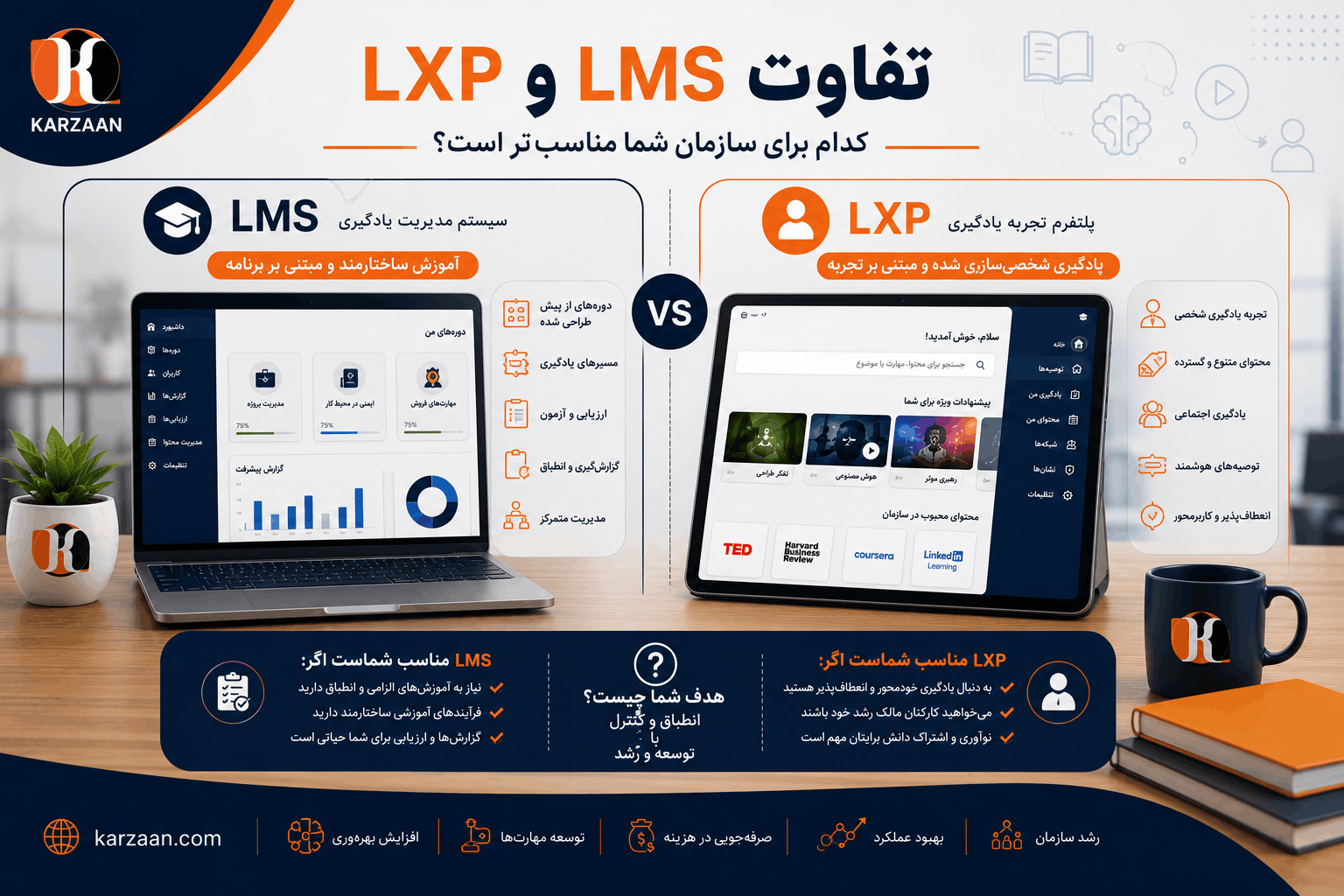
After success in one unit, extend the agent to similar units and then move on to use cases that connect several units, such as linking mine grade with plant recovery or the production plan with logistics. Creating an internal team to maintain the agents and train users ensures this path is sustainable. Training staff to work with agents can also be done through a learning experience platform (LXP); a topic we explain in our articles What is an LXP (in Persian) and AI in corporate training (in Persian).
To measure success, metrics such as unplanned downtime hours of key equipment, fleet waiting time, energy consumption per tonne of product, processing-plant recovery, product return rate, customer response time and the time staff spend finding information are good options. Track these metrics monthly and present the results to managers together with real examples.
Common Mistakes in Agent Projects in Steel and Mining
- Starting without a defined metric: if it isn't clear from the start which number the agent is meant to improve, its value can never be proven.
- Ignoring data quality: an agent built on incomplete, duplicate and inconsistent data produces unreliable results.
- Control access to equipment: the agent should never send commands directly to process control systems or machinery.
- Designing without field users: operators, shift supervisors and technicians must be involved in the design from the start.
- Overlooking conditions at remote mines: limited network connectivity at the mine must be considered in the architecture and app design.
- Island projects: scattered agents without a shared data architecture create high maintenance costs in the long run.
Why Karzaan for Designing Agents in Steel and Mining?
Karzaan has experience designing and delivering enterprise software (in Persian) and industrial systems, from HSE systems and corporate portals to websites and systems for industrial groups such as Segal Industrial Group. Karzaan's AI team designs agents with an architecture that can be deployed on the organization's own servers, full support for Persian and secure connections to existing systems such as ERP, the maintenance system, the laboratory system and the sales system. Alongside the agents, Karzaan LXP can make safety and technical-skills training for mine and plant staff intelligent.
Working with Karzaan usually starts with a process and data review workshop. In this workshop, together with representatives from the mine, the plant, maintenance, safety, sales and IT, we identify bottlenecks, assess the available data and choose one or two use cases for the pilot. The output is a roadmap with measurable metrics. To see our work, visit our projects page, and for all our services, see Karzaan's services.
Conclusion
AI agents can create value across the entire steel and mining chain: more precise grade control at the mine, higher fleet productivity, more stable operation and higher recovery in processing, better quality and lower energy use in steelmaking, greater safety, timely supply and faster customer response. The conditions for success are starting from a specific bottleneck with a clear metric, taking data quality and integration seriously, keeping the decision-making role with people and expanding gradually from one unit to the whole chain.
If your company works in steel, mining or minerals and wants to know where AI agents can create the most value, Karzaan's experts are ready to review your processes and data and propose a suitable roadmap. For a free consultation, get in touch through our contact page.