
AI Agents Across Industries: Use Cases Compared
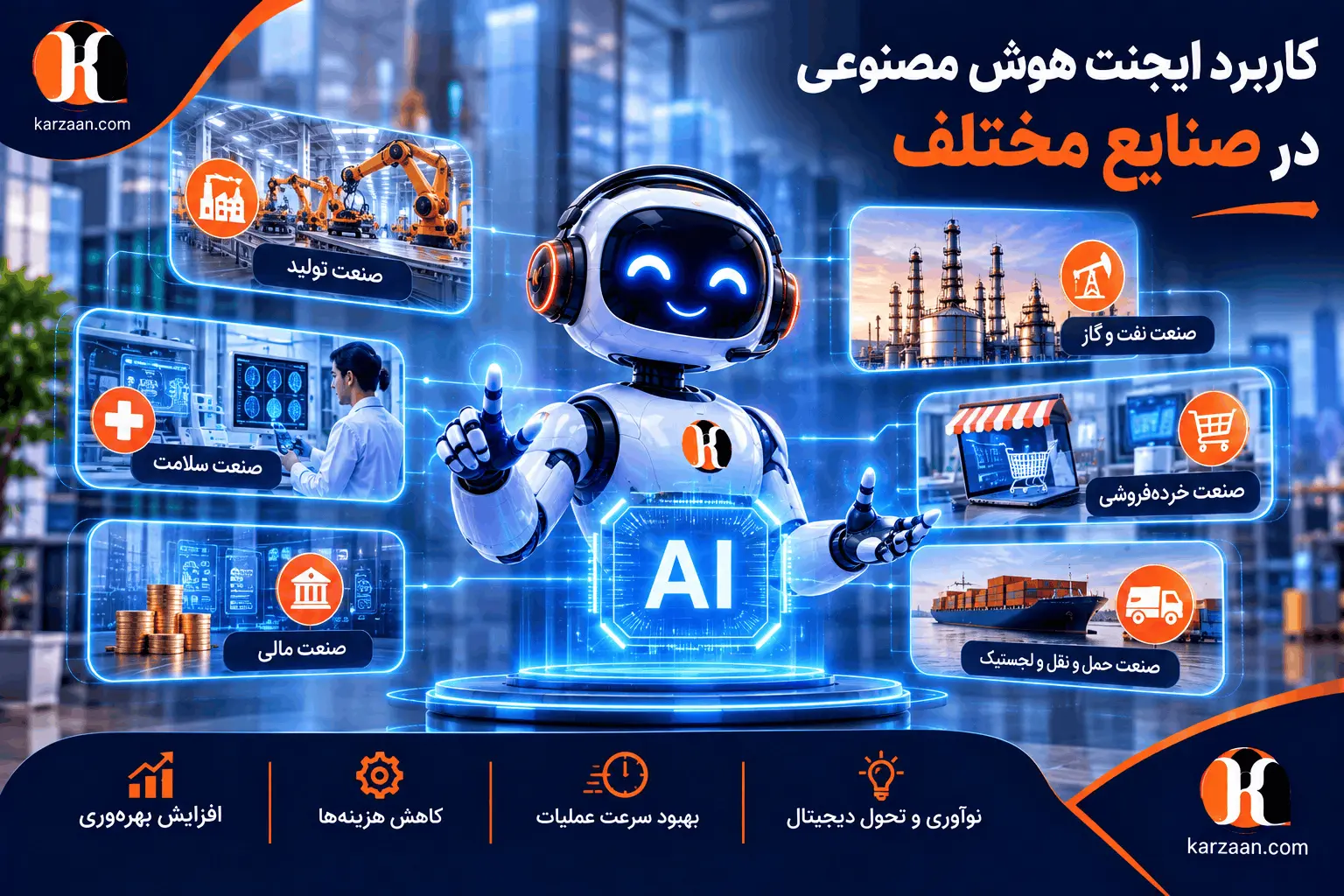
An AI agent looks different in every industry: in a bank it must verify the customer before any answer, in a refinery it stands beside the maintenance technician, in a hospital it only moves administrative work forward, and in a distribution company it pulls the order out of a shopkeeper’s short message. This article is the map of our “Agents in industry” series and puts agent use cases in financial services, energy and heavy industry, retail and distribution, universities, hospitals and HR side by side. We explain what changes from one industry to another, which patterns repeat everywhere, how much authority the agent has in each field and what criteria to use for choosing an organization’s first agent. For the details of each industry, we link to its dedicated article.
In this article
- 01 What changes in an agent from one industry to another?
- 02 Map of the series: the most important agent use case in each industry
- 03 Agents in financial services
- 04 Agents in energy and heavy industry
- 05 Agents in trade and the supply chain
- 06 Agents in higher education and healthcare
- 07 Agents in departments every organization shares
- 08 Patterns that repeat across all industries
- 09 The agent’s level of authority in different industries
- 10 Where should we start the first agent?
- 11 The shared architecture of industry agents
- 12 Conclusion and talking with Karzaan
AI agents across industries: a guide to choosing the right use case for each industry
An AI agent looks different in every industry. In a bank, the agent must verify the customer’s identity before any answer and take every suspicious transaction seriously. In a refinery, the agent stands beside the maintenance technician and, drawing on manuals and failure history, shows the path to troubleshooting. In a hospital, the agent only moves administrative work forward and leaves every clinical decision to the care team. In a distribution company, the agent pulls an order out of a shopkeeper’s short message and checks it against warehouse stock and the credit limit. The underlying technology is shared by all of these, but the data, systems, users, regulations and cost of errors differ from one industry to the next.
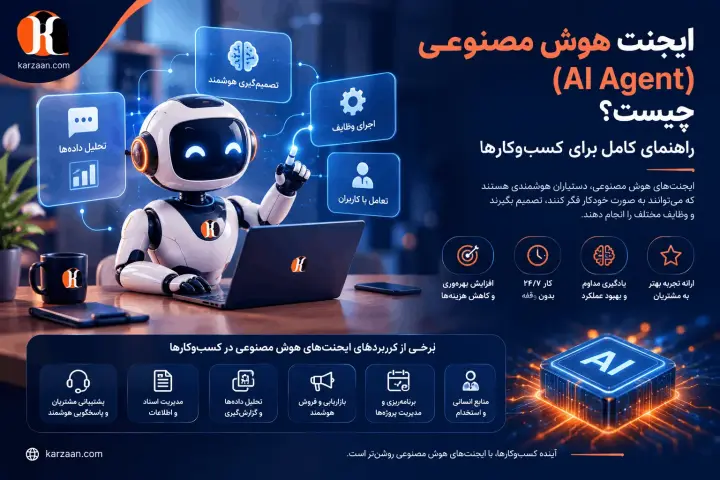
In our “Agents in industry” series we have reviewed agent use cases in each industry separately and in detail. This article is the map of all those articles: it shows which use case creates the most value in each industry, which patterns repeat across all industries, how much authority the agent should have in each field and how an organization should choose its first agent. If you are not yet familiar with the concept of an agent and how it differs from a chatbot, first read What is an AI agent? (in Persian) and then come back here. To learn about the services Karzaan offers in this field, you can also see Karzaan’s AI services.
What changes in an agent from one industry to another?
When a manager asks “What will an AI agent do for our industry?”, the answer does not start with an introduction to the language model. The language model is more or less the same in every industry; what separates an insurance agent from a mining agent are three things: the data and systems the agent connects to, the regulations it must respect and the cost its errors carry for the organization, and the people who work with it.
These three factors determine where the agent can act automatically, where it should only make suggestions and where it should not step in at all. That is why copying the agent design of one industry into another usually does not work, and every project must start with an understanding of these three factors.
Beyond these three factors, each industry’s organizational culture also matters. In industries where employees are used to digital systems, agents are adopted faster; but where a large part of the work is still done on paper or by phone, the agent should first support those familiar channels, such as messaging apps or phone calls, so users are not forced into a sudden change of habits.
The data and systems the agent connects to
Without real data an agent only talks; its value appears when it can read from the organization’s systems and record work in them. These systems differ in every industry. In a bank, the core banking system and payment systems; in insurance, the policy and claims systems; in oil and gas, process control systems, maintenance software and the engineering document archive; in a university, the student information system and the learning management system; in a hospital, the hospital information system; and in distribution and retail, the accounting, warehouse and fleet software.
The type of data also differs. In heavy industry a large part of the data is sensor signals and maintenance records; in insurance and banking, forms, contracts and transactions; in universities and hospitals, personal records with strict privacy requirements. This difference determines which tools the agent needs for reading documents, analyzing time series or searching the organization’s knowledge. We have explained the challenges of connecting these systems further in ERP integration (in Persian).
Regulations, risk and the cost of errors
An agent’s mistake in suggesting a similar product in an online store can be fixed with an apology; but a mistake in reporting a patient’s status, approving a claim or ignoring a safety alarm in a refinery has serious consequences. The higher the cost of an error, the more the agent should remain an assistant and leave the final decision to a person.
Regulations also take a specific shape in each industry: central bank and anti-money-laundering requirements in financial services, insurance regulator requirements in insurance, process safety standards in the energy industry, medical record confidentiality rules in healthcare and educational regulations in universities. The agent must be designed with these rules from day one, not have them added later.
Users and conversation channels
The agent’s user is sometimes an external customer and sometimes an internal employee. The online shopper and the policyholder talk to the agent through the website and messaging apps; the maintenance technician beside the equipment on a tablet; the distribution company’s sales rep in the street on a phone; the student in the learning system and the professor between classes. Each has a different language, schedule and level of patience.
An agent built for a specialist employee can speak in technical terms and give more detail; but an agent that talks with the general public must be simple, patient and clear, and hand the conversation to a person wherever necessary. The user experience of these tools matters as much as their accuracy; read about its principles in Enterprise UI/UX design (in Persian).
Map of the series: the most important agent use case in each industry
The table below summarizes the articles in the series. For each industry we list the use case that is usually the best starting point, the systems the agent needs to connect to and the most sensitive risk that must be controlled.
| Industry | Lead use case to start with | Main systems | Most sensitive risk |
|---|---|---|---|
| Banking and fintech | Answering customers and tracking requests | Core banking, payment systems | Fraud and leakage of financial data |
| Insurance | Claim reporting and follow-up | Policy and claims systems | Unfair claim decisions |
| Oil, gas and petrochemicals | Maintenance assistant | Maintenance software, engineering document archive | Process safety |
| Steel and mining | Monitoring the fleet and energy use | Production, fleet and energy data | Decisions on heavy equipment |
| Online stores | Customer support and order tracking | Store, warehouse, shipping | Wrong information on price and stock |
| Distribution | Order taking over messaging apps | Accounting, warehouse, fleet | Errors in orders and credit |
| Universities | Answering students’ academic questions | Student information system, LMS | Academic dishonesty and privacy |
| Hospitals | Appointments and pre-admission | Hospital information system | Straying into clinical decisions |
| Human resources | Employee help desk | Personnel and payroll systems | Bias in hiring |
This table is only a starting point. In each industry there are other high-value agents, which we cover below and in that industry’s dedicated article. The key point is that the lead use case in every industry shares one feature: a high volume of repetitive work and low decision risk.
Agents in financial services
Banks, fintech companies and insurers deal with a high volume of customers, forms, contracts and transactions, while working under strict supervision by regulators. This combination makes financial services one of the most widely used and at the same time most sensitive fields for agents.
What banks and insurers have in common is that their core product is trust. The customer has entrusted their money or financial future to the organization, and every wrong answer or data leak damages that trust. That is why in financial services the agent must be transparent about the information it used to answer, say honestly wherever it is not sure, and hand the conversation to a specialist in sensitive cases.
Banking and fintech
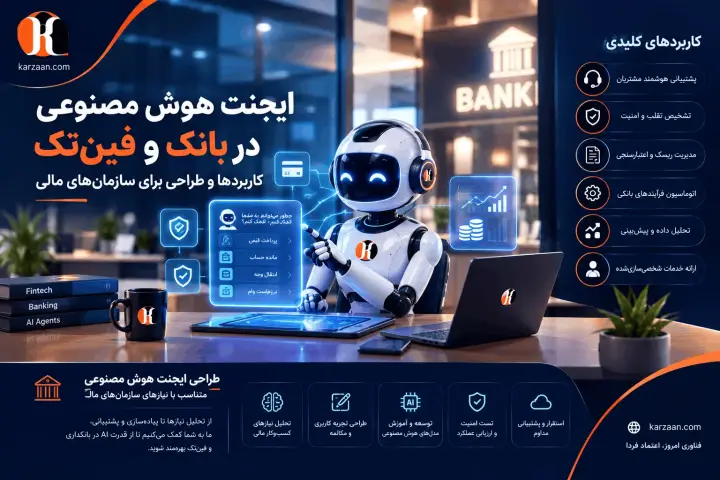
In banking and fintech, most of the load falls on answering customers: the status of a transfer, why a transaction was declined, the documents needed for a service or the follow-up of a request. The agent can answer these questions by reading the real status of the account and the request, provided it securely verifies the customer’s identity before every answer.
Deeper use cases include helping with identity verification and document checks, monitoring transactions for signs of fraud, preparing the credit file for the analyst and a knowledge assistant for branch staff. In all of these cases, decisions on freezing an account, granting a loan or approving an unusual transaction stay with a person. Read the details of this industry in AI agents in banking and fintech (in Persian).
Insurance
Insurance is a chain of sales and advice, underwriting, claim reporting and handling, fraud detection and renewal. The moment of a claim is the most important moment in the policyholder’s relationship with the insurer, and the agent can make that very moment easier: explain the documents required, receive and check photos and forms, and keep the policyholder informed about the stage of the file.
A special feature of insurance is how sensitive claim decisions are. The agent can complete and summarize the file and flag signs of fraud, but rejecting or reducing a claim must stay with an adjuster so the policyholder’s rights are protected. See the scenarios for this industry in AI agents in insurance.
Agents in energy and heavy industry
In energy and heavy industry, the agent’s main users are internal staff: technicians, operators, engineers and safety specialists. The data is mostly sensor signals, maintenance records and technical documents, and safety comes before everything. In these industries the agent almost never controls equipment directly; its role is to summarize, alert and make knowledge accessible.
Another feature of these industries is geographic spread and harsh working conditions. Remote sites, night shifts and hazardous environments mean the agent must be usable on tablets and phones, sometimes with a weak internet connection, and its answers must be short, precise and backed by the official procedure.
Oil, gas and petrochemicals
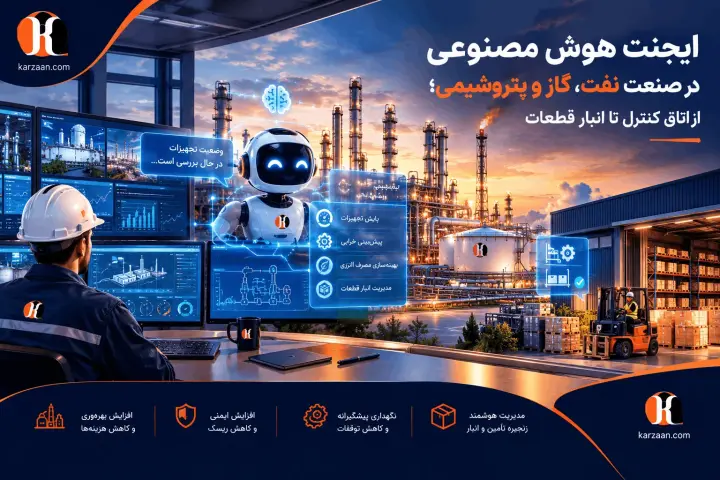
In this industry, maintenance is the highest-return entry point for agents. When the monitoring system shows rising vibration on a pump, the agent can bring together the data trend, the repair history of that equipment and the manufacturer’s manual, and prepare for the shift technician a summary of the likely cause, inspection steps and parts needed. The final decision still rests with the technician.
Other use cases include grouping control room alarms, helping HSE specialists with forms and work permits, searching the mass of engineering documents and capturing the experiential knowledge of veteran specialists. Karzaan has experience in this field designing the ZISA integrated HSE system. These use cases are described in full in AI agents in oil, gas and petrochemicals.
Steel and mining
The steel and mining chain runs from exploration and mine planning to processing, melting, rolling and product delivery, and in every link heavy equipment operates and a great deal of energy is consumed. That is why even the smallest improvement in fleet planning, energy use or product quality has a large financial effect.
In this industry the agent can read scattered data from the mining fleet, production lines and energy use together, flag deviations earlier and prepare clear reports for engineers. Control of furnaces, machinery and processes remains with the control systems and operators. Read the details in AI agents in steel and mining.
Agents in trade and the supply chain
In trade, whether online retail or wholesale distribution, speed of response and order accuracy turn directly into sales. Margins are usually thin and customer and order volumes high, so agents here focus mostly on frequent, measurable tasks. For a broader view of this field, also see supply chain management (in Persian).
An important difference between an online store and a distribution company is the type of customer. The store’s buyer is a consumer who may buy only once, but the distribution company’s customer is itself a business with a long-term relationship with the company. This difference changes the agent’s tone, the information it shows and the credit and payment rules.
Online stores
In an online store, the agent is present throughout the customer journey: shopping advice before the order, order and shipping tracking, answering common questions, recovering abandoned carts and after-sales support. Customer support usually has the highest volume and the fastest return on investment, and is the best starting point.
The main difference between an agent and a store’s ordinary chatbot is that the agent is connected to orders, stock and the shipping system and can actually get work done, not just show canned text. The main risk lies right there: prices and stock must always be read from the system. Read the full scenarios in AI agents for online stores.
Distribution
A distribution company deals with thousands of retailers, field sales reps, several warehouses, a delivery fleet and sales on credit. The order taking agent can read an order from a shopkeeper’s short text or voice message, match the everyday product name to the item code, check stock and the credit limit and send back a pro forma invoice for confirmation.
The sales rep assistant, regional inventory forecasting, loading planning and receivable reminders are other use cases in this industry. A special feature of distribution is that an agent’s error turns directly into money: a wrong order, a wrong price or wrong credit. A dedicated article on this industry will be published in this series soon.
Agents in higher education and healthcare
Universities and hospitals are two large service institutions that work with many people, heavy administrative processes and sensitive personal data. In both, the core of the work, meaning teaching and treatment, is human work, and the agent should remove the administrative load so professors and doctors have more time for their main work.
Both institutions also work on tight calendars: registration and exam periods at universities, and peak hours at clinics. In these periods the volume of questions multiplies, and an agent that can answer a large share of the repetitive questions takes the pressure off staff and shortens queues.
Universities and higher education
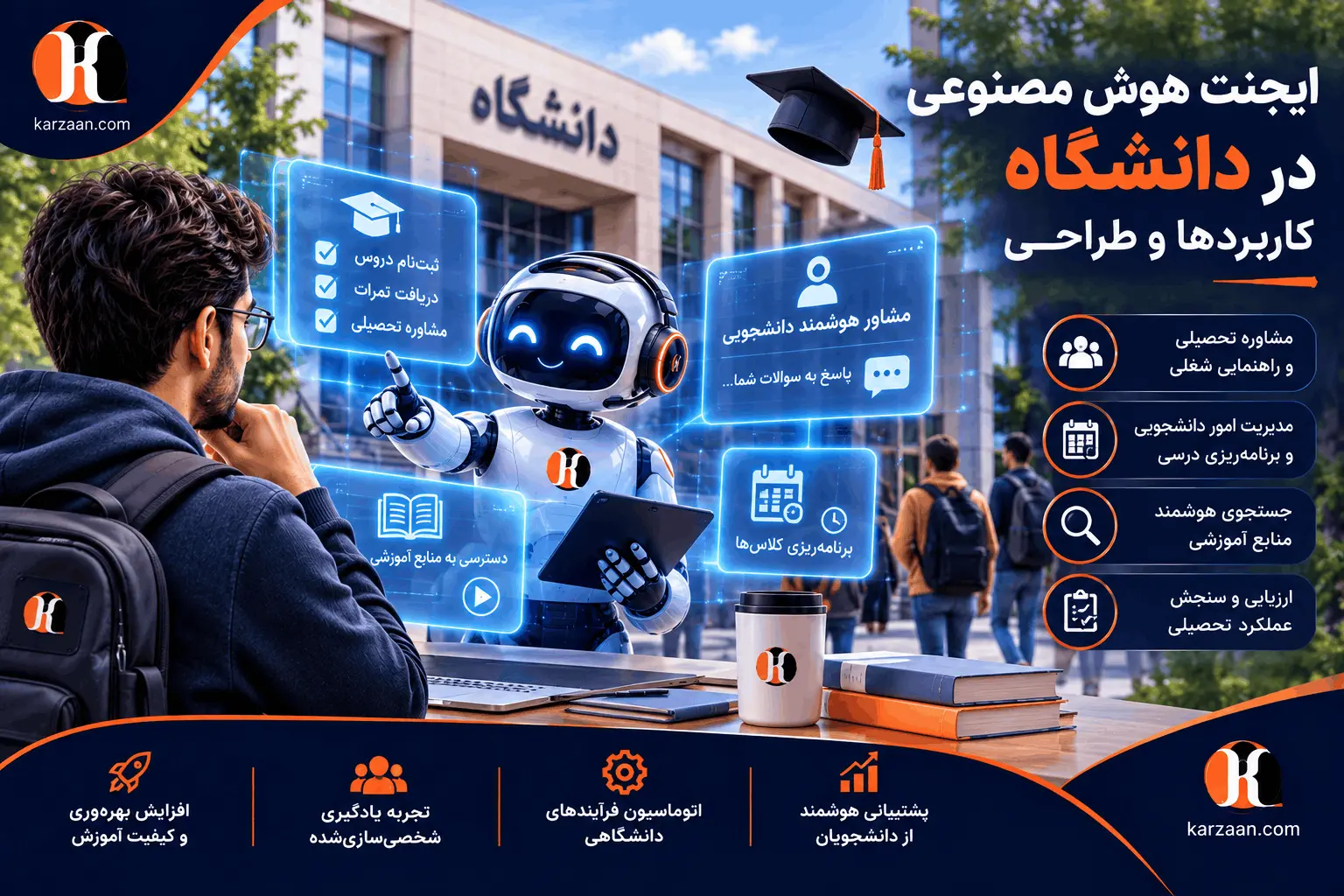
The student cycle starts with admission and registration and continues through academic affairs, learning, exams and research. The agent can answer repetitive academic questions, guide students in course selection, act as a learning assistant alongside course content and lighten the grading and feedback load for professors.
The specific risk at universities is the line between helping with learning and doing assignments for the student, as well as the privacy of grades and records. Karzaan has experience in this field with projects such as the University of Tehran integrated applied and professional training system. Read the scenarios for this field in AI agents in universities.
Hospitals and healthcare centers
In hospitals, patients and families wait on busy phone lines for appointments, preparation instructions or news about a patient, and the care team spends a large part of its time writing reports. The agent can handle appointments and pre-admission, answer administrative questions, prepare draft record summaries and discharge letters for the care team and check files before they are sent to insurers.
The boundary in this industry is the clearest of all: the agent does not diagnose, does not suggest medication and does not interpret test results. Any sign of an emergency also leads to guidance to seek urgent care. A dedicated article on this industry will be published in this series soon.
Agents in departments every organization shares
Some departments do not belong to a specific industry and exist in every organization, from banks to refineries and universities. An agent for these departments can be designed once and, by adjusting each organization’s rules, used across different industries.
Another advantage of starting with these departments is that their users are the organization’s own employees. The agent’s errors happen in an internal, controllable environment, feedback is gathered faster and the organization can gain experience working with agents internally before turning to external customers.
Human resources
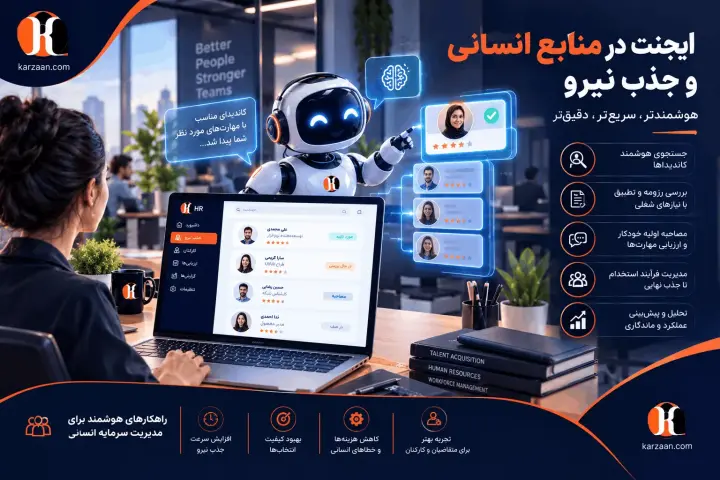
The HR department is under the weight of résumés, employees’ repeated questions, interview coordination and appraisal forms. The agent can help across the entire employee lifecycle: initial screening and interview coordination, supporting new hires in their first days, answering employees’ questions about leave and pay, suggesting learning paths and preparing data for performance reviews.
The most sensitive part is hiring, where model bias can lead to unfairness. In this part the agent only makes suggestions and the final decision rests with a person. See the details in AI agents in HR.
Corporate learning and knowledge transfer
In every industry, an important part of knowledge lives in the heads of experienced employees and is lost when they retire. A knowledge agent can make procedures, records and captured experience available to new employees, and a learning agent can suggest a learning path for each person suited to their role and level.
This is exactly where agents connect with learning experience platforms. If you are not familiar with this concept, read What is an LXP? (in Persian); in this field Karzaan also offers Karzaan’s smart LXP, which provides organizations with short, personalized, AI-based learning.
Patterns that repeat across all industries
Looking across all the industries, a few shared patterns stand out. Almost every organization, whatever its industry, has at least one of these four needs, and these patterns form the basis of most agent projects. Knowing them helps us carry the experience of one industry correctly into another without copying a design blindly.
Answering questions and tracking requests
The bank customer, the policyholder, the online shopper, the distribution company’s retailer, the student, the patient and the employee all share one need: a quick answer to their question and news about the status of their request. This is the highest-volume agent pattern and usually has the fastest impact.
The differences between industries in this pattern come down to two things: how strictly the agent must verify the user’s identity before answering, and at what point it must hand the conversation to a person. In banks and hospitals these boundaries are stricter, and in online stores simpler.
Reading and processing documents
Résumés in HR, claim documents in insurance, engineering documents in oil and gas, patient records in hospitals, theses at universities and invoices in distribution are all documents that today take up a large part of employees’ time to read, check and summarize.
The agent can read these documents, extract the key information, flag gaps and prepare a summary for the decision-maker. What all industries share is that the agent’s output in this pattern must be reviewable: every claim in the summary must point back to a specific part of the original document.
Monitoring, alerts and forecasting
Vibration on a refinery pump, energy use at a steel plant, an unusual transaction at a bank, an item running low in a distribution warehouse and a student whose activity in the learning system has dropped are all examples of one pattern: the agent monitors data, detects an unusual pattern and alerts the right person.
The value of this pattern lies in early alerts, but its risk is too many alerts. If the agent keeps raising low-importance alerts, staff will soon ignore all of them. Tuning thresholds with the help of that industry’s experts is an inseparable part of this pattern.
Management reporting and asking questions of data
Managers in every industry face scattered reports, and finding the key point in them takes a lot of time. A reporting agent can summarize exceptions and problems in plain language every day and let the manager ask questions directly of the data.
This pattern is usually the last stage of any project, because it needs data from every department. The reporting agent’s answers must also always come with the data source and time period so they can be verified. For a broader view of where AI fits in an organization, see Where should we use AI? (in Persian).
The agent’s level of authority in different industries
One of the most important decisions in designing an agent is setting how far it can act on its own. The answer differs in every industry, and even within one organization it varies from one process to another. The general rule is simple: the higher the cost of an error and the harder it is to undo, the less authority the agent has.
Where the agent only makes suggestions
In clinical decisions at hospitals, equipment operation in oil, gas and steel, claim decisions in insurance, lending decisions in banks and the final choice in hiring, the agent only gathers and summarizes information and makes suggestions. The decision rests with the person accountable for it.
In these fields, the agent’s value lies in shortening the time to a decision and making the information more complete, not in removing the decision-maker. An organization that moves this line usually loses the trust of its staff and customers at the first serious error.
Where the agent can act
By contrast, tasks such as booking appointments, tracking order status, sending reminders, placing orders within a defined credit limit, categorizing requests and answering informational questions can be handed to the agent. These tasks have clear rules and their possible errors can be corrected.
Even in these tasks, three principles are constant across all industries: the agent works with the identity and access level of the user, business rules are enforced in the system layer and not only in the model’s instructions, and all actions are recorded in an auditable log.
Where should we start the first agent?
Most organizations start with a long list of ideas and do not know which one to build first. Experience across industries shows that the choice of the first agent, more than anything else, determines the fate of later projects; if the first agent has a clear impact, the way opens for the rest.
Criteria for choosing the first agent
The first agent should ideally have these features:
- A high volume of repetitive work that takes up a lot of staff time today
- Clear, written rules, or rules that can be written down
- Low decision risk and errors that can be corrected
- Ready data and a system that can be connected to
- An impact that can be measured with a simple metric
- A process owner who wants the change
By these criteria, the first agent in most industries is one of the answering or tracking use cases, the “lead use case” column in the table at the start of this article.
Questions to answer before starting
Before you start building, discuss a few questions with the team: what exactly will the agent do and not do? Which systems will it connect to, and with what access level? Under what conditions will it hand the conversation to a person? With what metric will its success be measured, and what is that metric’s current value? Who will review the agent’s output in the first weeks?
Clear answers to these questions define the project’s scope and prevent unrealistic expectations. The cost of each project also depends on the project’s needs, the state of existing systems and the number of systems that must be connected.
A common mistake in every industry is starting with the most ambitious idea: an agent meant to cover every process at once. Such projects usually drag on, their impact shows late and they lose management support. The safer path is to build a small, successful agent and expand it step by step.
The shared architecture of industry agents
Despite all the differences, the architecture of agents across industries shares a common backbone. Knowing this backbone helps an organization build the infrastructure of its first agent so it can be reused for later agents.
The connection layer and access control
The agent should never have direct access to databases. The right approach is to build a secure API layer through which the agent can reach only permitted data. This layer passes on the user’s identity, enforces business rules and blocks unauthorized actions, even if the model is misled by a deceptive message.
Encryption, role-based access control and data minimization are mandatory in every industry, and in industries such as banking and healthcare, deploying the model on internal infrastructure or masking identifying data before it is sent to the model becomes even more important. Read the general principles of web system security in Ways to improve website security (in Persian).
Logging, auditing and continuous improvement
An agent launched today is not complete. In the first weeks, reviewing a sample of conversations and actions, fixing rules and completing the agent’s knowledge is the main work. For this, all of the agent’s actions and the reason for every decision must be logged so the team can see where a rule was incomplete and where the data was wrong.
This same careful logging is also the organization’s answer to regulators: in financial, healthcare and energy industries, the organization must be able to show what the agent did and on what basis. An agent that cannot be audited has no place in these industries.
Conclusion and talking with Karzaan
An AI agent in every industry is shaped by that industry’s data, systems, regulations and users. The patterns of answering, document processing, monitoring and reporting repeat everywhere, but the agent’s level of authority and its boundaries must be set with a precise understanding of that particular industry. The best start is a frequent, low-risk and measurable use case, and the infrastructure built for it becomes the foundation for later agents.
With experience in enterprise software, learning systems, payment systems and AI agents, Karzaan can support you from needs analysis to implementation and support. To learn more about Karzaan’s services and see our portfolio, or for a free consultation about the right agent for your industry, get in touch with the Karzaan team through the contact page.
Frequently asked questions
01 How do AI agent use cases differ across industries?
02 In which industries does the agent only suggest and not decide?
03 How should we choose an organization’s first agent?
04 Can one industry’s agent be copied to another industry?
05 How much does it cost to build an AI agent for an industry?
Reading path
 Article
AI Agents in Universities: Admissions, Learning, Research
Every semester universities face a wave of repeated questions about course selection, add and drop, tuition and grades, and academic staff drown in messages. Professors also spend much of their time answering repetitive…
Read it-
01
AI Agents in Universities: Admissions, Learning, Research
-
02
 What is an AI Agent? A Complete Guide for Businesses
-
03
 AI Agents in HR and Recruitment
-
04
 AI Agents in Banking and Fintech | Use Cases and Design for Financial Organizations
-
05
 AI Agents in Oil and Gas: From Maintenance to HSE
-
06
 AI Agents in Insurance: From Underwriting to Claims
User Reviews
What users say about us
Post a New Review
No reviews have been posted for this project yet
Post a New Review
Send us your review